



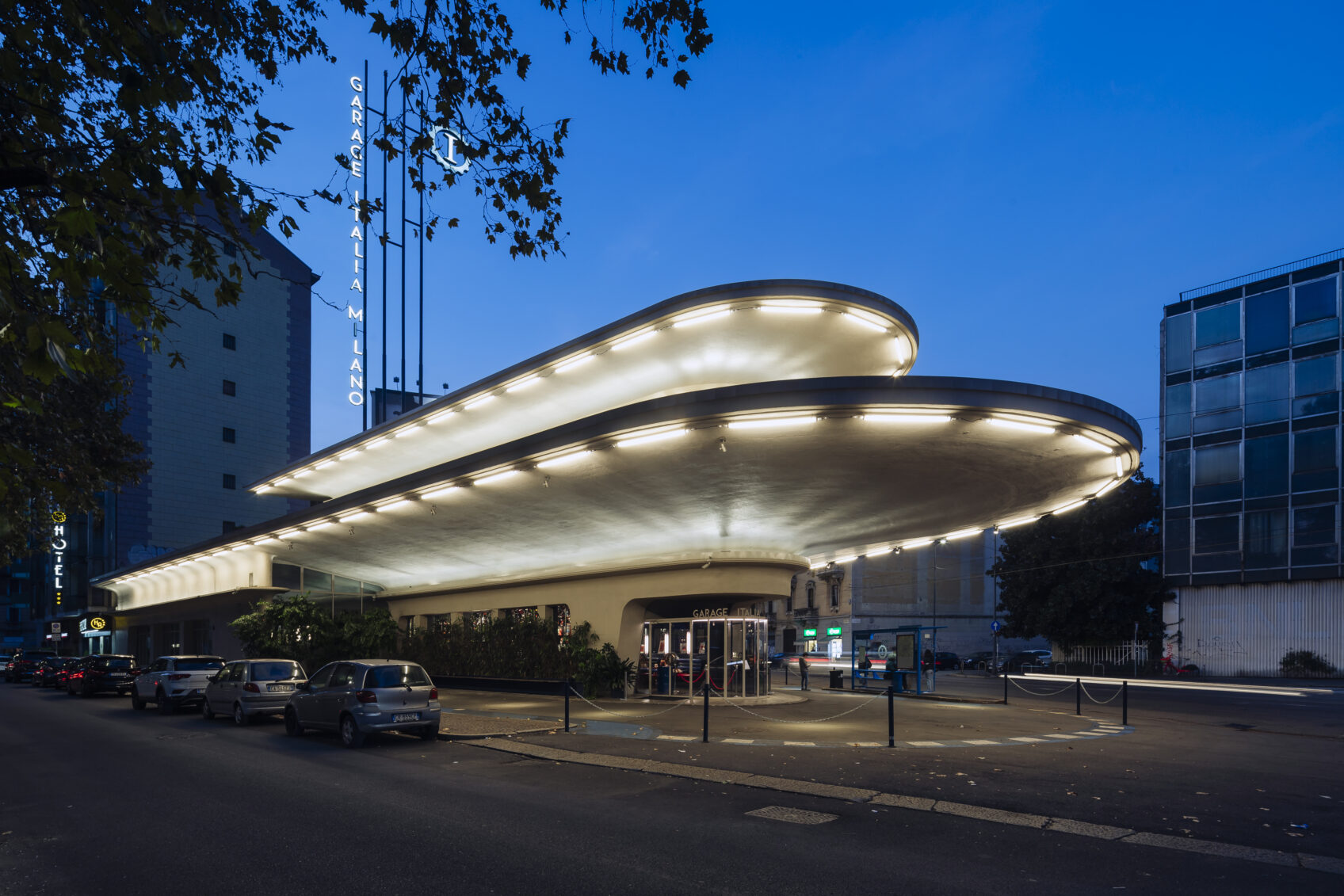
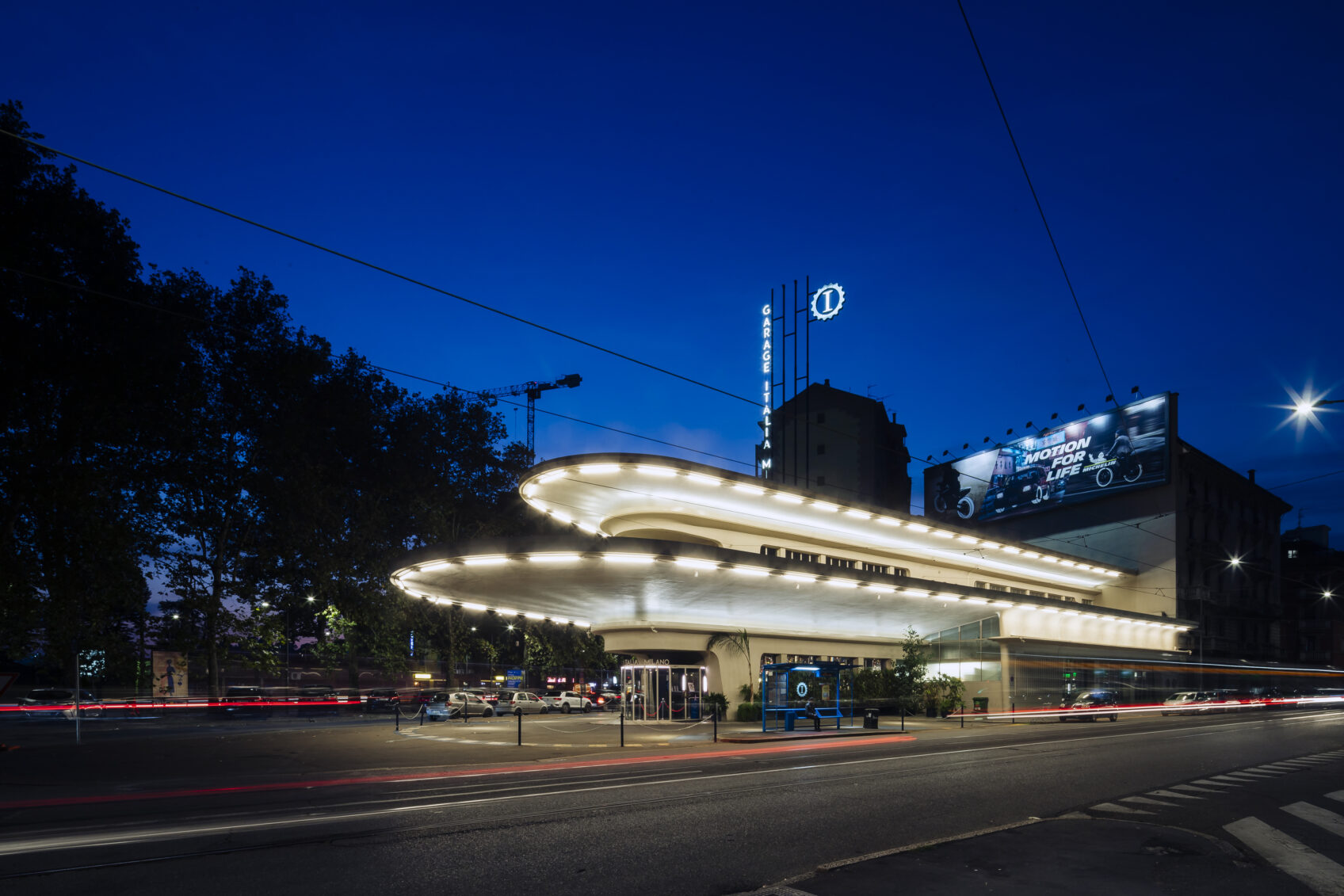
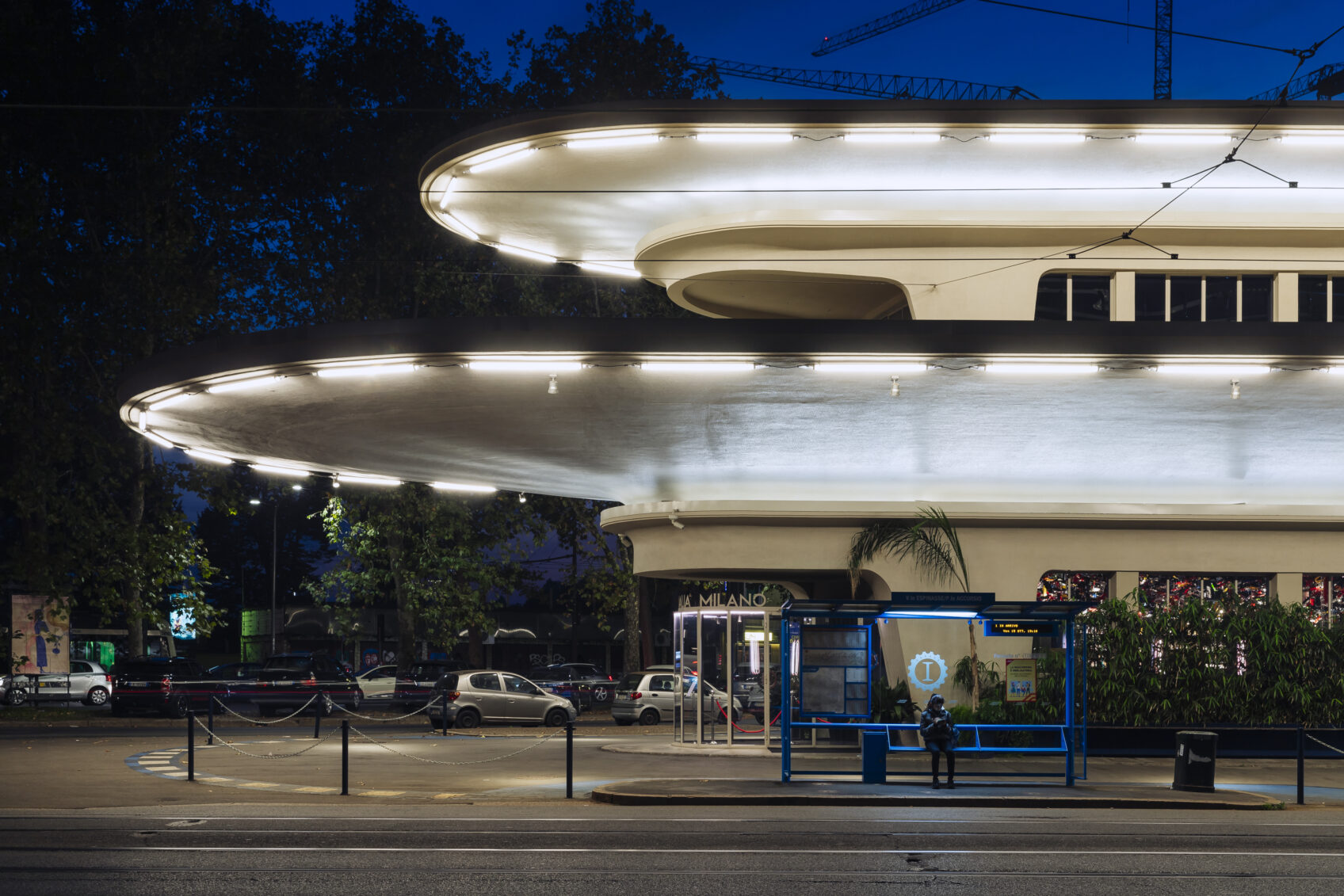
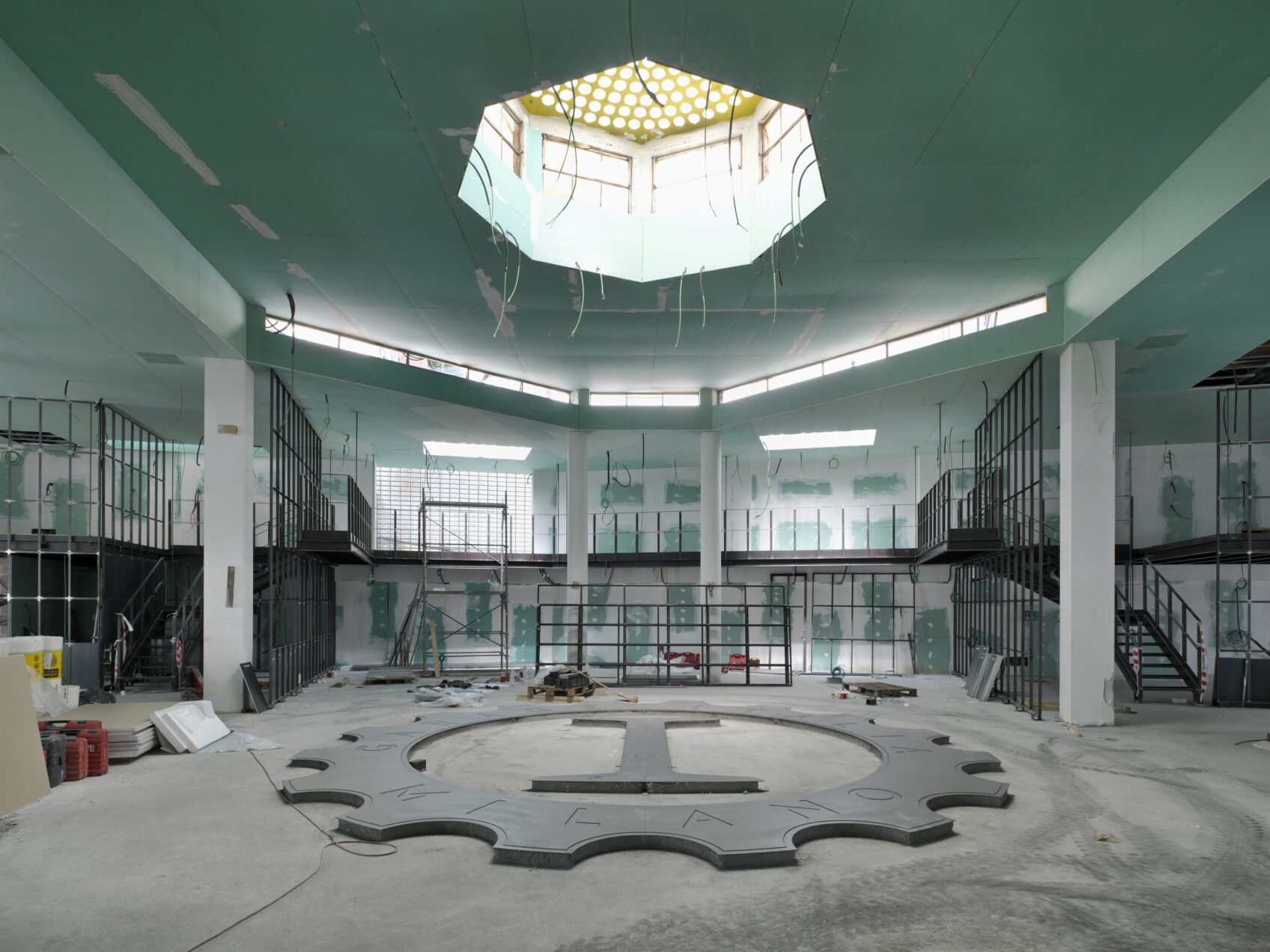
In Piazzale Accursio, along Viale Certosa, stands the former Agip Supercortemaggiore station, commissioned in 1952 by Enrico Mattei to architect Mario Bacciocchi and long considered a veritable temple to the automobile, frequented by the many who traveled on the Milan-Laghi highway on weekends. No longer in operation since the late 1980s, it has undergone conservative restoration and structural consolidation at the behest of Lapo Elkann and Carlo Cracco. Today, it houses the new headquarters of Garage Italia, which has set up its own car customization workshop on the ground floor of the building, with the upper floor dedicated to a restaurant managed by Carlo Cracco.
The structure, known as one of the most original pieces of architecture of its time, is an example of the streamline modern style and is characterized by its rounded headboard, at the intersection between Viale Certosa and Viale Espinasse, as well as its bold cantilevered canopies. The conservation work ensured that the glass and metal entrance at the top of the building was preserved, while the ceramic mosaic tiles covering the external facades and the curved surface of the canopies had to be cleaned and restored to their original color. To enhance the aerodynamic shape of the building, two rows of neon lights were installed around the perimeter of the wings, positioned as they were in the 1950s.
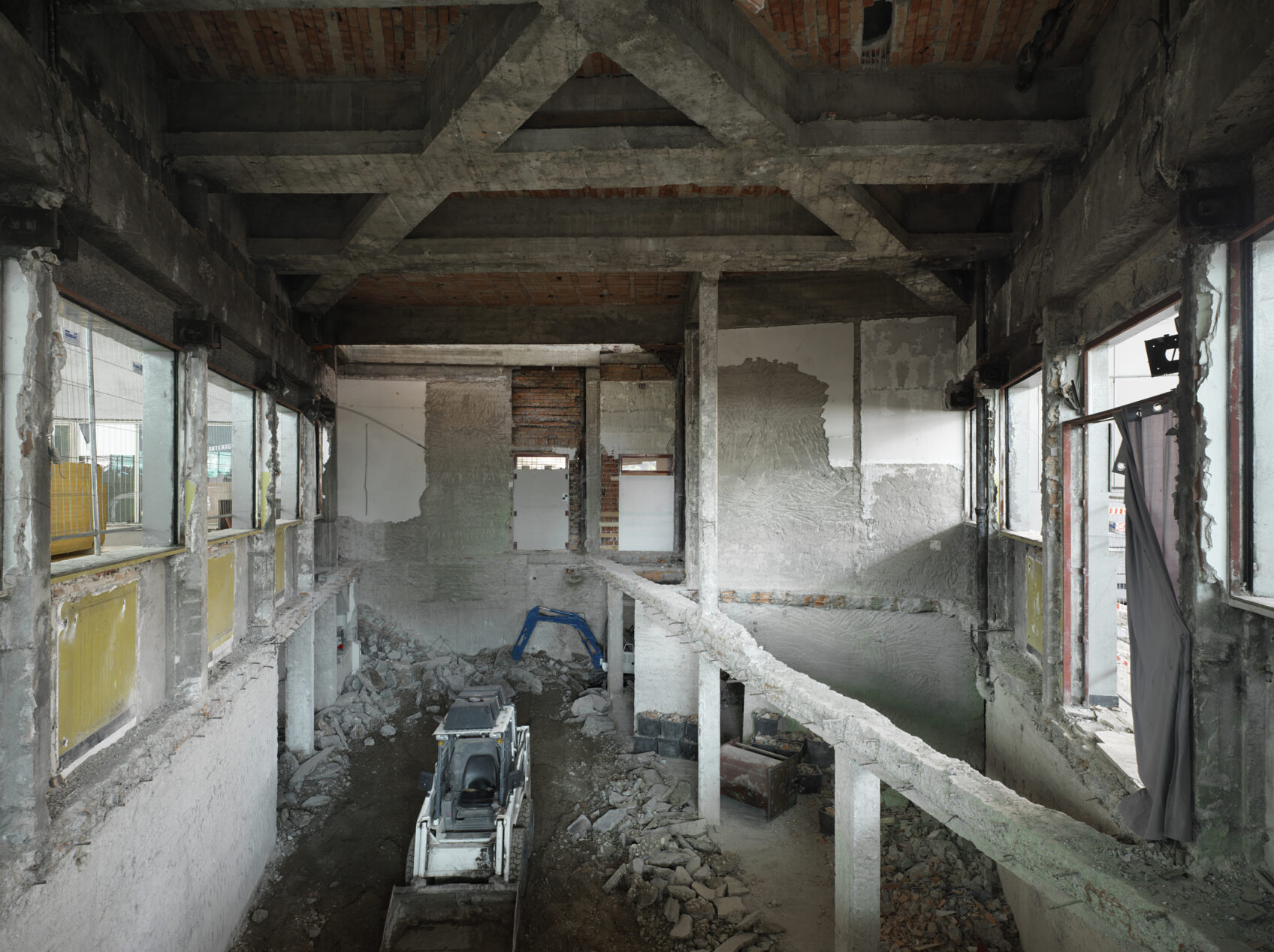
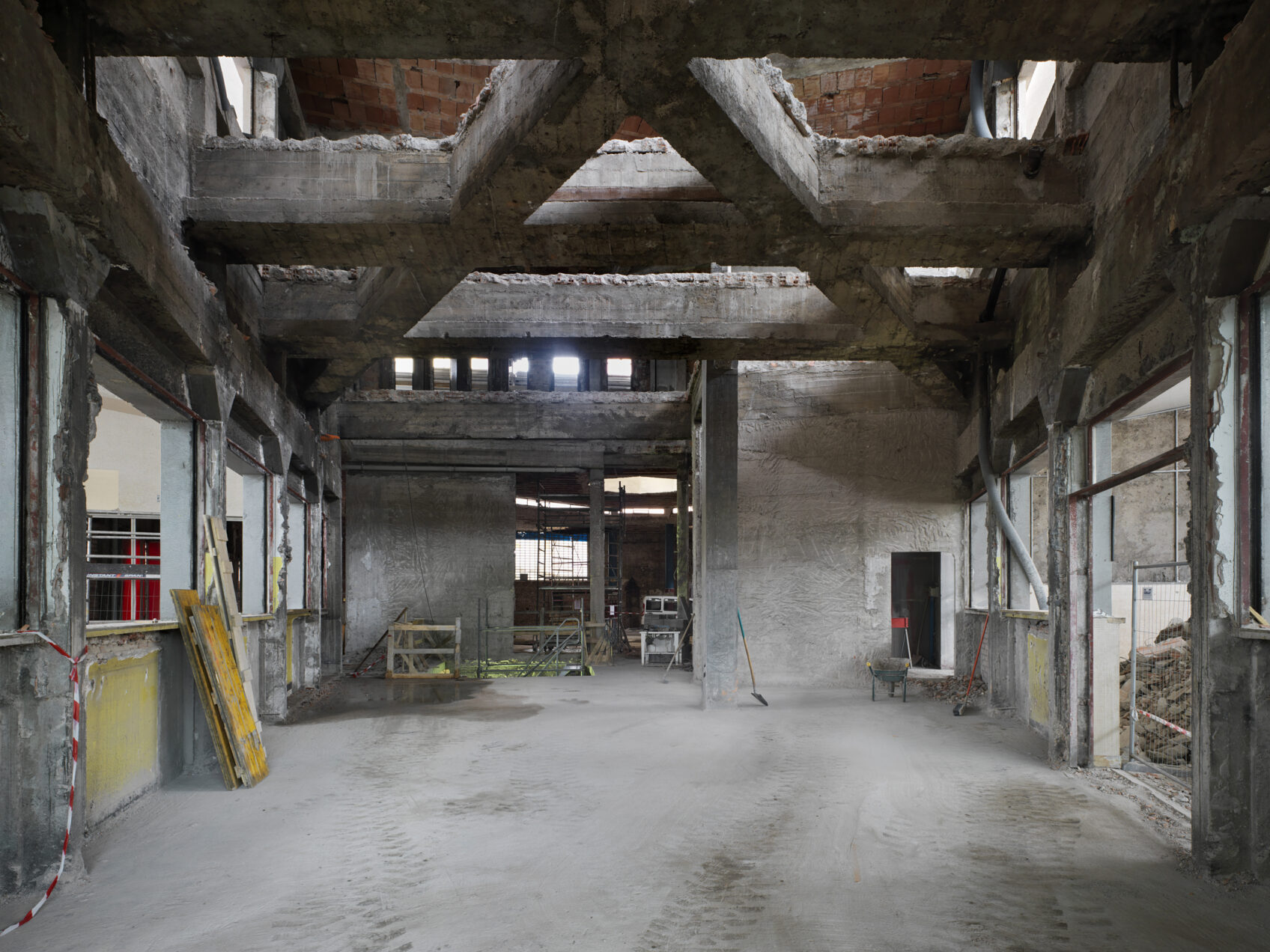
The historical nature of the building, its location within the urban fabric, and its consequent symbolic value for the city required rigorous investigation of the existing structures, which, having been built at the time with poor and recycled materials, needed radical consolidation work. Particular attention was paid to respecting the constraints linked to the historical character of the structure, while it was necessary to carry out careful remediation of hazardous and polluting materials linked to the building's former function.
One of the most critical aspects of the construction site involved the constant monitoring of excavation activities below the existing foundations. The project required the construction of new concrete retaining walls, pillars, direct foundations on flat slabs, and interconnecting retaining slabs. During construction, the foundations were supported by steel-reinforced micropiles to support the building during the excavation phase only. Given the building's restricted context and its central location, it was necessary to coordinate various specialists in the field in order to properly manage the numerous aspects related to the redevelopment work.
info@buromilan.com
stampa@buromilan.com
C.F./P.I. 08122220968
C.D. M5UXCR1
Spotorno Square, 3
20159 Milan - Italy
T +39 02 36798890
Santa Croce 458/A
30135 Venice - Italy
T +39 041 5200158